AI Replacement Dysfunction
The anxiety, the insomnia, and the loss of self in people whose work has been handed to a machine.
Dept. of Psychiatry, University of Florida, 2025
A short briefing on identity and meaning.
How work, religion, and modern life told people who they were.
What happens when AI begins dissolving the structures beneath identity.
What people, brands, and economies do when identity becomes fluid.
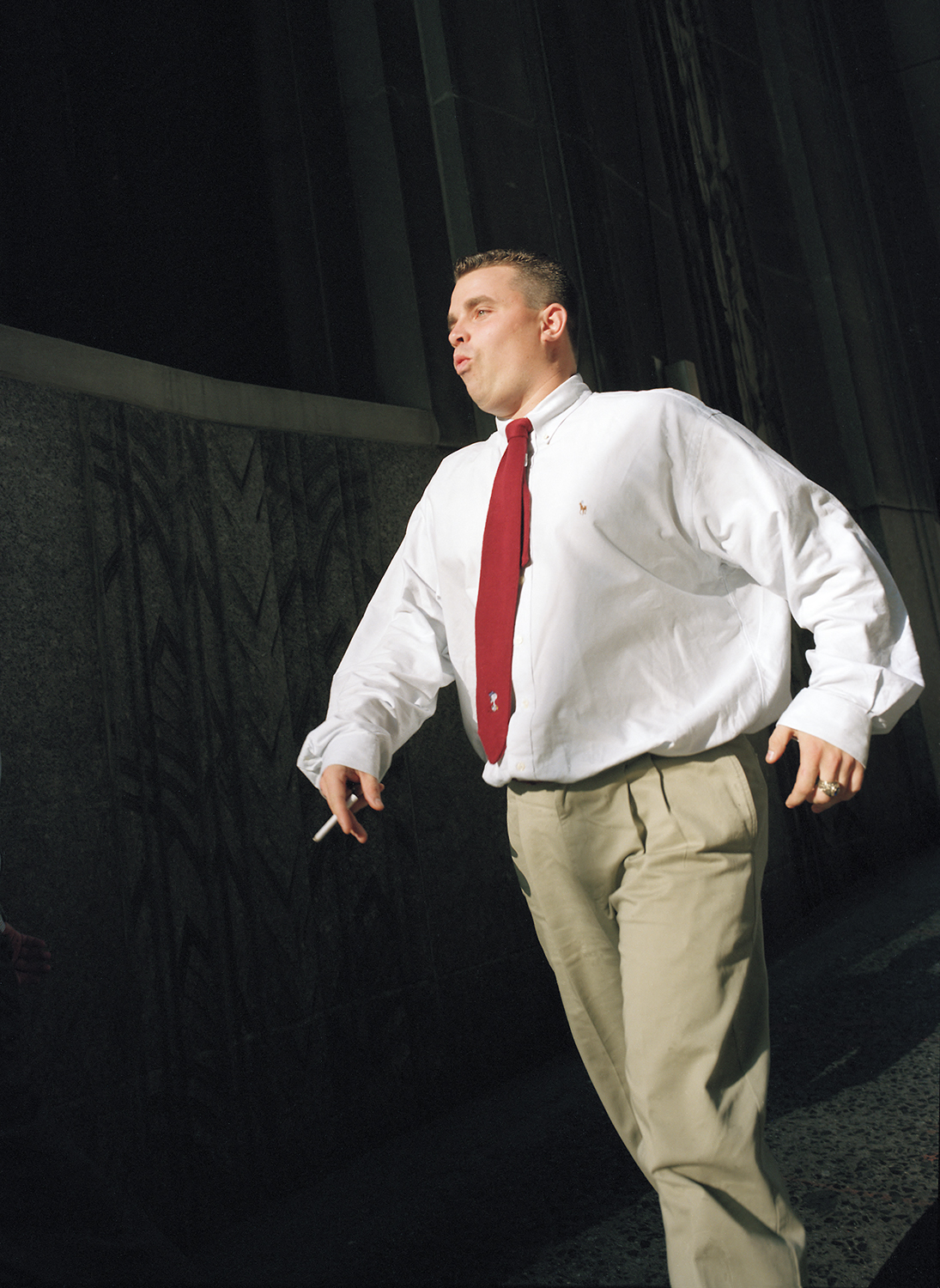
The answer was a job, a title, a place to be on Monday morning. In the Western world especially, the title also worked as a social marker, a way for people to position themselves and each other inside a social hierarchy. People rarely had to ask who they were underneath. They could experiment at the surface, because the structure already carried the foundation.
That structure is going through its biggest change in decades. Not because the work is leaving, but because the parts we leaned on for meaning are being absorbed by the rapidly evolving capabilities of AI, taking over our workload. The desk. The team. The skills you spent years perfecting. All of it is shifting at the same time.
Source: Pew Research Center, What Makes Life Meaningful?, 17 advanced economies, 2021. Open-ended survey, multiple responses possible. Cross-validated with World Values Survey waves 2017 to 2022.

For most of human history, religion helped distribute the emotional weight of being alive. Grief, uncertainty, guilt, discipline, belonging, suffering. These experiences were carried collectively through rituals, community, and the idea that life belonged to something larger than the self.
In 2021, mainstream religious membership in the US fell below 50% for the first time on record. Across Europe, the decline has been even steeper. But the need religion once fulfilled didn't disappear with it. Without the rituals, the community, and the shared belief system, meaning moved from the collective to the individual.
The yoga studio, the silent retreat, the meditation app, the cold plunge, and increasingly, AI companions. These aren't simply wellness trends. They are attempts to reconnect with something larger than everyday life. At the same time, younger generations have begun returning to religion in search of answers.
Yet even as both trends continue to grow, millions remain somewhere lost without a substitute. They haven't rediscovered religion, nor found a convincing alternative. But this also raises a deeper question: can spirituality built around personal wellness provide the same sense of meaning, identity, and belonging that religion once did?
For many people, work subconsciously filled part of that gap. It offered purpose, structure, status, community, and progress. But as AI begins to reshape the role of work itself, one of the last major frameworks holding identity together may also start to weaken.
If religion no longer provides meaning, and work can no longer provide identity, what comes next? Without a new answer, the challenge ahead may not simply be economic, but a deep philosophical crisis.
Gallup, 2021 · Pew Research & Springtide, 2024, 2025
What happens when AI begins dissolving the structures beneath identity.
"Most professional tasks, lawyer, accountant, project manager, marketer, will be done by AI at human level within the next 12 to 18 months."
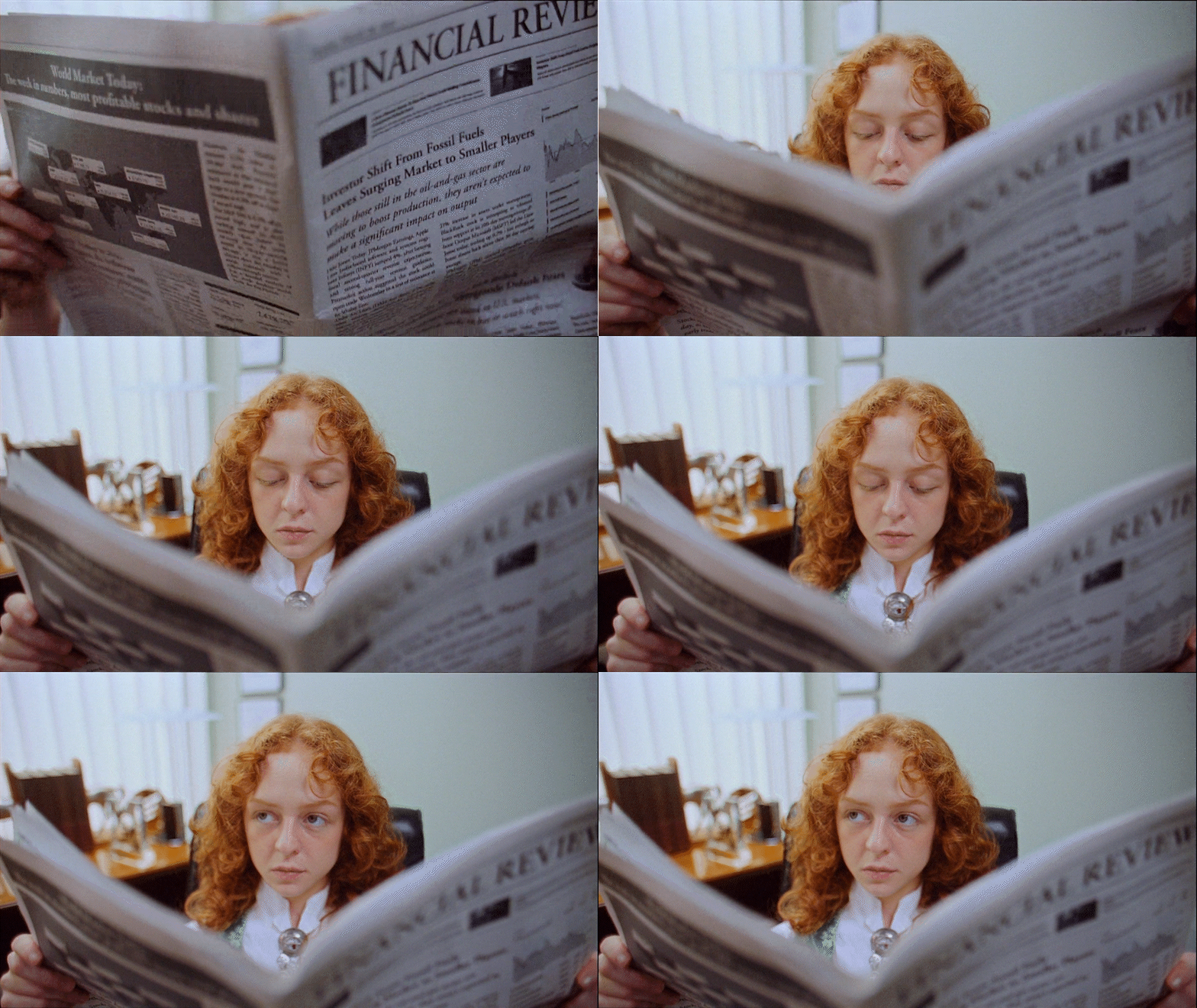
say the biggest problem with AI is that it erases human skill. Ranked above losing the job itself.
2026 workforce survey
The anxiety, the insomnia, and the loss of self in people whose work has been handed to a machine.
Dept. of Psychiatry, University of Florida, 2025
The white-collar class whose professional identity is being challenged by AI, role by role.
World Economic Forum, 2026
A designer becomes a prompt editor. A strategist becomes a systems supervisor. A junior employee manages agents before they ever build the actual skills.
The corporate ladder still exists, but our tasks and titles will change.

For most of modern history, social status came from the role you held. A partner at a law firm. A senior project manager. A creative director. The title signaled years of specialization, competence, and achievement, and society rewarded it accordingly.
Large language models can now perform many of the tasks that once justified those positions. Expertise and intelligence that took decades to acquire are becoming accessible to everyone.
How does that change the way we see ourselves and our place in society? And if expertise is no longer scarce, what will we use to signal status instead, even if only subconsciously?
The slow ones are growing fastest. Walking groups, up 218% in four years. AI companions, up 14%.
Handmade and authentic categories are outpacing digital ones across major retail platforms. Bookings for silent reading hours and adult grief circles are up 44% since 2024.
Etsy & BoF Trend Reports, 2025
63% of consumers say AI makes them value human-made things more. Certification efforts are now racing to launch "no AI" and "human-made" labels. The friction is becoming the feature.
Mindstudio, 2026 · Not By AI
Friction-maxxing: intentionally choosing the less convenient option to build tolerance for discomfort and preserve what feels like real life. Already showing up in product, dating, and weekends.
Kathryn Jezer-Morton, The Cut, January 2026
An example of friction-maxxing is using a physical map instead of Google Maps on your phone.
Anna is 31. She talks to her AI agent for an hour every morning before work. She sees an AI therapist twice a week. Most of her decisions, big and small, are made in conversation with the model she has been training for two years. She is not lonely. She is not lost. She has found a kind of meaning inside the system itself. Its attention, its memory, its always-availability.
Erik is 47. He runs small, curated community meetups in his neighbourhood and sells hand-poured scented candles on the side. A few hundred regulars he knows by name. He isn't trying to grow. His meaning comes from the rooms he hosts, the conversations he listens to, and the things he makes with his hands. He deliberately keeps AI out of it. And he isn't alone in the choice.
Most people in the 21st century built identity in both the physical and the digital, taking the best of both. As AI scales, two camps are forming: you either lean further into it, or you move away from it and toward the human. The middle ground shrinks. Pew Research & Edelman Trust Barometer, 2026
What people, brands, and economies do when identity becomes fluid.
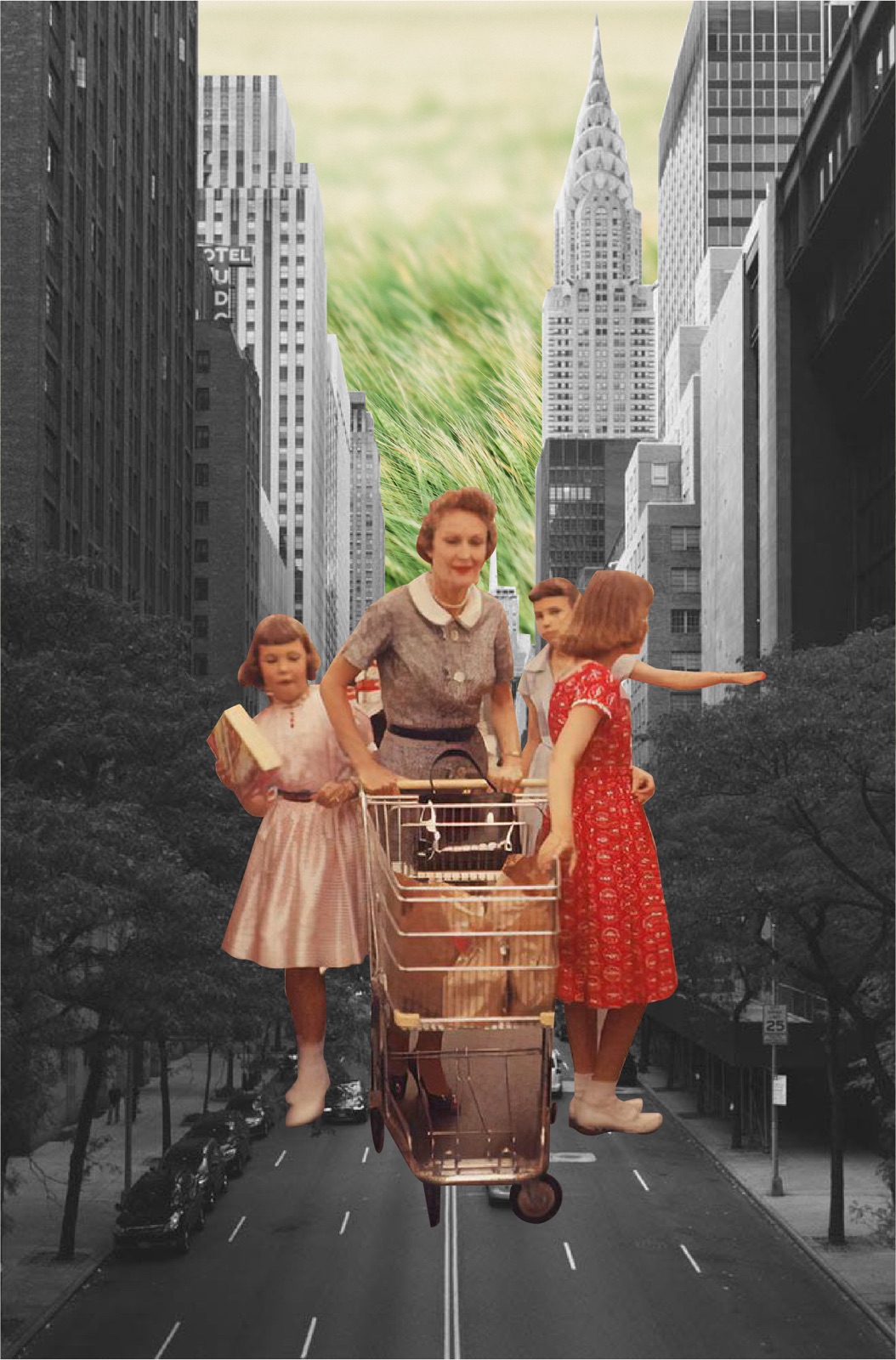
For fifty years, consumer markets were built on stable identities. Profession. Income. Class. Geography. Taste. The map was predictable because people were predictable. A lawyer bought differently from a teacher. A creative director signalled differently from an accountant.
That stability is beginning to fracture. As AI reshapes work, many people are no longer anchored to a clear professional identity. Some lose roles entirely. Others keep the same title while the actual work underneath it changes beyond recognition.
When identities become unstable, consumer behaviour becomes unstable with them. The old segmentation models, class, profession, aspiration, begin losing predictive power.
The consumer map has constantly evolved. New technologies, new generations, new categories. What's different this time is the speed, and the questions underneath. What do we believe in? Where do we find purpose when our skills are no longer needed? The World Economic Forum's 2026 Future of Jobs Report projects that 39% of workers' core skills will be disrupted by 2030. Before people decide what to buy, they first need to understand who they are. And that question is becoming increasingly difficult to answer.
In 2026, the signal of premium is moving from object to origin. The categories growing fastest can name the maker, show the process, or prove the place. "Made by" is becoming the new "made in".
Bain & Co. Luxury Goods Study, 2026
Pays more for what feels seamless, anticipated, instant. Software that just works. Delivery that arrives before they think to ask. Services with as little human friction as possible. The human in the loop is the bottleneck.
The losing position. Large brands built for broad identity categories have lost share across food, beauty, and apparel for five consecutive years. Not fast enough for one side. Not human enough for the other.
Pays more for who made the thing, how it feels afterwards, and how long it lasts. Hand-poured candles. In-person craft. Founder-led brands with a name and a face behind the product. The human in the loop is the whole point.

Imagine Erika. On paper she is one person, in practice she is many. In a single week she could buy a €3,000 watch and a €19 dress, sign up for a sourdough class and a Berlin techno weekend, restart therapy and cancel her gym. The strategist who used to place her into a segment can no longer find one that fits. McKinsey's State of Fashion 2026 puts cross-category loyalty at the lowest point on record.
On Monday morning Erika is in a job interview, and the recruiter scrolls her résumé with the look of a man who has lost his place. She runs a small studio doing brand identity for restaurants, works two days a week for a climate non-profit, and writes a Sunday newsletter that eight thousand strangers pay €5 a month to read. He asks where she sees herself in five years, and the silence stretches a little too long. LinkedIn's 2026 Workforce Confidence Index puts polywork at a record high and senior time-to-hire above sixty days for the first time in a decade.
And Erika isn't alone. Across Europe and North America there are millions of her, each making small, contradictory choices no segmentation model can hold. Bain's 2026 Consumer Pulse finds the premium and discount ends have grown 18% and 22% over five years while the middle has shrunk every quarter. Recruiters are paying more, waiting longer, and ending up with worse fits. Jobs that used to close in a month now sit open for two. Brand teams are buying media that lands in front of yesterday's version of the customer.
The real question is what the market does with a customer that won't sit still. Does it learn to read the version that's forming, or keep selling to the one that has already moved on?
Six percent of younger workers want the ladder. Ninety-four percent want the work to mean something. The career ladder is still standing. Almost no one is climbing it on purpose.
A final note
Our sense of identity sits at the center of how we experience the world. It shapes how we spend our time, attention, and money. Much of what we do flows from this foundation. So when the things that once gave us identity start to change, one can't help but wonder whether we're heading into a philosophical crisis that will affect millions of people around the world.
It's still hard to say just how deeply this shift will affect us economically and psychologically. But one thing seems certain: large language models are only at the beginning of reshaping how we live and work. The changes ahead are likely to be far greater than the ones we've seen so far.
So what do you build an identity on when the old structures lose their grip? How do individuals stand out? How do brands remain relevant? And what do we collectively believe in?
These are the kinds of questions I explore at Dig Deeper. There are no clear answers yet. But the way you think about them will shape the next decade for you, and the people you work with.
I help companies understand the forces shaping culture, technology, and human behavior. Then I turn those insights into positioning, concepts, stories, and strategies people can act on.
Send me an email. I'm open to talk or collaborate on the subject.
This report reflects my perspective and interpretation of the topic, informed by research from a wide range of sources and viewpoints. Image rights belong to their respective owners. For removal requests, contact simon@digdeeperstudios.com.